How to Create a Comfortable Minimalist Living Room: 7 Simple Tips


A minimalist living room should feel calm, not empty — and comfortable, not clinical. The most successful minimalist interiors are not created by simply removing everything from the room. They come from choosing fewer pieces more carefully, giving furniture enough space to breathe and balancing clean lines with softness, texture and warmth.
The sofa is particularly important. As one of the largest pieces of furniture in a living room, its size, shape, upholstery and comfort can determine whether the whole space feels relaxed and considered or sparse and uninviting.
If you love the simplicity of minimalist interiors but still want a living room where you can genuinely relax, these seven ideas will help you create a comfortable minimalist living room that works in everyday life.
For inspiration, explore our collection of modern sofas, including clean-lined, low-slung, curved and deep-seat designs.
What Is Comfortable Minimalism?
Comfortable minimalism — sometimes called warm minimalism or soft minimalism — combines the simplicity of minimalist interior design with furniture, colours and materials that make a home feel inviting.
The aim is not to make a room look empty. Instead, it is about reducing unnecessary visual clutter and giving more importance to the pieces that remain.
A comfortable minimalist living room might contain a generous sofa, one or two occasional chairs, a rug, a coffee table, good lighting and a small number of carefully chosen accessories. There may be fewer objects than in a heavily decorated room, but everything should contribute through comfort, function or visual interest.
1. Start With a Sofa That Is Comfortable Without Excess Styling
Your sofa should be comfortable before you add scatter cushions, throws or other accessories.
For a minimalist room, look for a sofa with a relatively simple silhouette combined with generous, supportive seating. Deep seats, well-filled cushions and balanced proportions can provide plenty of comfort without making the design visually complicated.
A minimalist sofa does not have to be hard, rigid or angular. Soft cushioning, generous proportions and even curved forms can work beautifully as long as the overall design remains coherent and uncluttered.

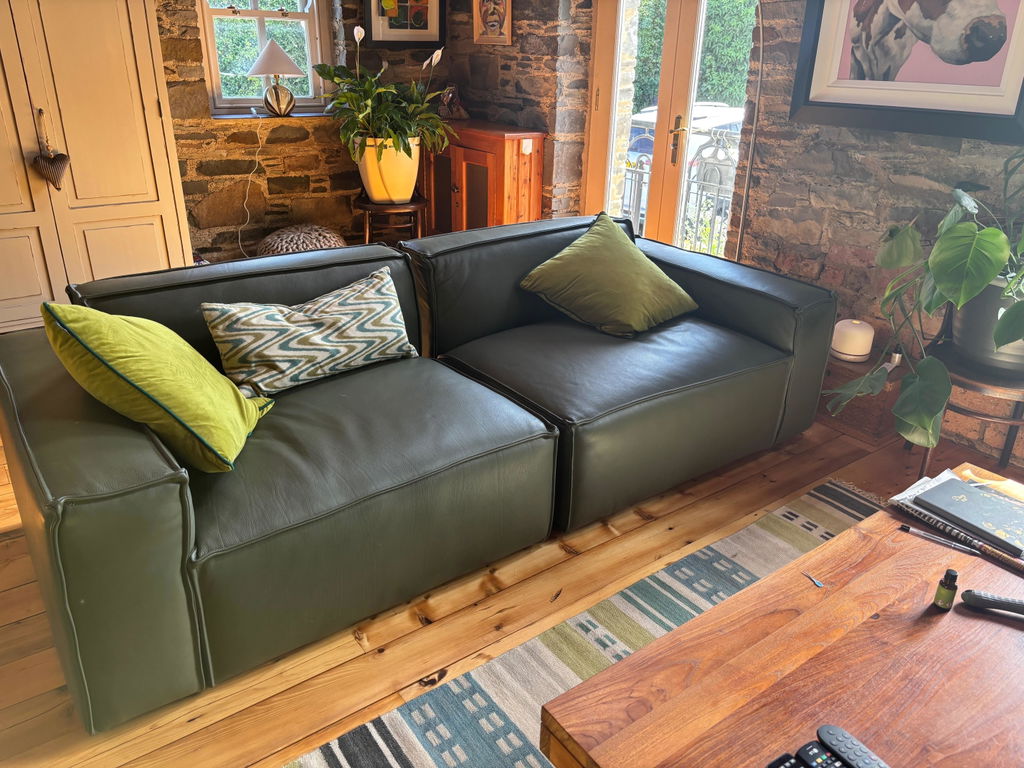
The Mila Modern Sofa is a good example of comfortable minimalism. Its clean silhouette is relatively restrained, while its deep proportions and generously cushioned seating create a much softer and more relaxed character.
2. Get the Size and Proportion of Your Sofa Right
Minimalism depends as much on space and proportion as it does on colour or furniture style.
An oversized sofa squeezed into a small room can make even the simplest interior feel cluttered. Equally, a sofa that is too small for a large room may look lost and leave the space feeling unfinished.
Before choosing your sofa, consider the dimensions of the room, the main walkways, doors and windows, as well as the other furniture you need to accommodate.
It is also worth measuring the route into the room, including doorways, hallways, stairs and tight corners, before ordering any large sofa.
Do not assume that minimalist decorating means choosing the smallest sofa possible. One generous and comfortable sofa can often create a calmer room than several smaller pieces of furniture competing for space.

The Asher Sofa shows how substantial furniture can still feel minimalist. Its low profile and simple overall shape balance its generous proportions and oversized arms.
3. Use Warm Neutrals Instead of Making Everything White
A minimalist living room does not have to be completely white.
In fact, using only brilliant white walls, pale flooring and cool-toned furniture can sometimes make a room feel more clinical than calming.
Warm neutrals can create the same sense of visual simplicity while making the space considerably more inviting. Cream, oatmeal, stone, taupe, mushroom, warm grey, soft brown and muted earthy shades all work particularly well.
The aim is not necessarily to make everything exactly the same colour. Instead, choose a restrained palette of related shades.
For example, a cream sofa could sit against warm white walls with an oatmeal rug, natural wood furniture and one or two darker brown accents. There is enough variation to create depth without every object competing for attention.
4. Add Warmth With Texture Rather Than More Clutter
Texture is one of the easiest ways to stop a minimalist living room from feeling flat.
When you deliberately limit the number of colours and decorative objects in a room, differences between materials become much more noticeable.
Consider combining materials such as linen, cotton, wool, velvet, leather, natural timber, woven fibres, stone and ceramics.
A neutral sofa upholstered in a tactile linen, for example, will have more visual depth than an equally neutral room where every surface is perfectly smooth.
The same principle applies to rugs, curtains, cushions and throws. You can keep the colour palette quiet while allowing the materials themselves to create interest.
5. Keep Scatter Cushions — Just Use Fewer of Them
Should a minimalist sofa have scatter cushions? Absolutely, if they improve the way the sofa looks or feels.
Minimalism is not a rule that says everything soft must disappear.
The key is to avoid covering the sofa with so many decorative cushions that guests have to remove half of them before they can sit down.
For many sofas, one or two thoughtfully chosen cushions are enough.
Try choosing cushions in colours already present elsewhere in the room and introduce variation through texture rather than using lots of competing patterns.
For example, an oatmeal linen sofa could be paired with a slightly darker linen cushion and a single velvet or wool cushion. The different surfaces create depth while the related colours retain a calm and coherent look.
6. Give Everyday Clutter Somewhere to Go
A minimalist living room is much easier to maintain when ordinary possessions have an obvious home.
Remote controls, chargers, magazines, children's toys, throws and other everyday objects are not evidence that minimalist living has failed. They simply need practical storage.
A storage footstool or ottoman can be particularly useful because one item can perform several functions: somewhere to put your feet, occasional seating, a surface for a tray and hidden storage for things you do not want permanently on display.
Closed cupboards and drawers can also be more practical than relying entirely on open shelving. Open shelves can look beautiful when carefully styled, but they can quickly create visual noise if every shelf is needed for everyday storage.
The aim is not to own nothing. It is to make it easy for the living room to return to a calm and uncluttered state.
7. Let One or Two Pieces Become the Focal Point
Minimalist interiors do not need to lack personality.
In fact, giving the eye one strong focal point can be more effective than decorating every wall and surface.
Your focal point might be a fireplace, an oversized piece of artwork, a beautiful coffee table, a view through a window or the sofa itself.
A sculptural sofa can be especially effective because its shape provides interest without requiring lots of additional decoration.

The Gianna Curved Sofa demonstrates this particularly well. Its sweeping silhouette creates visual interest through shape and proportion, allowing the rest of the room to remain relatively simple.
How to Make a Minimalist Living Room Feel Cosy
If a minimalist living room feels cold, adding more ornaments is rarely the best solution. Instead, focus on the elements that change how the room actually feels.
Layer the Lighting
A single bright ceiling light can make even a beautifully designed living room feel harsh. Combine general lighting with floor lamps, table lamps or wall lights to create softer pools of light in the evening.
Use a Generously Sized Rug
A large rug helps visually connect the sofa and surrounding furniture while adding softness underfoot. In many rooms, one generously proportioned simple rug looks calmer than a small rug surrounded by a large area of exposed floor.
Introduce Natural Materials
Wood, linen, wool, leather and other tactile materials help prevent a neutral interior from feeling overly polished or artificial.
Add Something Organic
A plant, a vase of branches or another simple natural element introduces irregular shapes and softness without creating much visual clutter.
Allow the Room to Look Lived In
Minimalism does not require your home to look like a showroom. A favourite book on the coffee table, a softly creased linen cushion or a throw ready to use can make a pared-back room feel much more welcoming.
What Makes a Sofa Look Minimalist?
There is no single shape that defines a minimalist sofa.
What matters more is the overall clarity of the design. Clean or gently curved lines, balanced proportions, limited decorative detailing and relatively restrained upholstery all tend to create a calmer visual appearance.
A minimalist sofa can therefore be slim and architectural, deep and low-slung or softly curved.
What usually makes the difference is whether the individual design elements work together rather than competing with one another.
This is why the Mila, Asher and Gianna can all work in minimalist interiors despite having very different shapes.
Minimalist Living Room Mistakes to Avoid
Choosing an Uncomfortable Sofa Because It Looks Minimal
A sofa exists to be used. If the room looks beautiful but nobody enjoys sitting in it, the design has missed the point.
Comfort should be part of the design decision from the beginning rather than something you try to add afterwards with cushions and throws.
Buying Furniture That Is Too Small
Minimalism does not mean filling a large room with tiny furniture. Correctly scaled pieces often make a space feel calmer because fewer items are needed.
Removing All Colour and Texture
A room made entirely from identical pale surfaces can feel flat. Keep the palette controlled, but allow subtle differences in colour, material and texture.
Using Too Many Small Accessories
A large number of small decorative objects can create more visual noise than one carefully chosen larger piece. Where possible, edit rather than continually add.
Forgetting Practical Storage
A minimalist room that only works when nobody actually lives in it will be difficult to maintain. Plan storage for the objects you use every day.
Frequently Asked Questions About Comfortable Minimalism
Can a Minimalist Living Room Still Be Cosy?
Yes. A minimalist living room can feel extremely cosy when comfortable furniture is combined with warm neutrals, tactile fabrics, natural materials, soft lighting and a small number of carefully chosen accessories. Minimalism is about reducing unnecessary visual clutter, not removing comfort.
What Colour Sofa Is Best for a Minimalist Living Room?
Neutral shades such as cream, oatmeal, taupe, warm grey and brown are easy to incorporate into minimalist interiors. However, a stronger colour can also work well when the sofa is intended to be the main focal point.
Should a Minimalist Sofa Have Cushions?
It can. Choose fewer cushions and concentrate on useful sizes, complementary colours and interesting textures rather than covering the sofa with decorative pillows.
What Fabric Works Best for a Minimalist Sofa?
Linen, cotton, velvet, leather, bouclé and subtle woven fabrics can all work. The best option depends on the style of the sofa, how the room is used and the amount of texture you want to introduce.
Do Minimalist Sofas Have to Be Low-Backed?
No. Low-profile sofas are common in contemporary minimalist interiors, but proportion and simplicity are more important than one particular height or shape.
How Many Cushions Should Be on a Minimalist Sofa?
There is no fixed number. One or two decorative cushions may be enough on a standard sofa, while a larger corner sofa may comfortably accommodate more. The aim is to add comfort without making the seating look crowded.
Can a Large Sofa Work in a Minimalist Living Room?
Yes. A large sofa can work extremely well in a minimalist living room when its proportions suit the space. One generous sofa may actually create a calmer appearance than several smaller chairs and seating pieces.
Comfortable Minimalism Is About Choosing Less, Better
The best minimalist living rooms are not empty spaces. They are rooms where the furniture, materials and accessories have been chosen deliberately.
Start with a sofa that is genuinely comfortable. Give it enough space to breathe. Build a restrained colour palette around it, introduce warmth through texture and natural materials, and keep only the cushions and accessories that add something useful or beautiful.
Most importantly, design the room for the way you actually live. A minimalist living room should still be somewhere you want to sit, relax, talk, read and spend time.
If you are looking for seating that combines contemporary design with everyday comfort, explore our collection of modern sofas, including deep-seat, low-slung and curved designs in a wide choice of upholstery options.
- Harold King
Comments 0